
Sonoma, CA · Garage Door Service
Why Sonoma's Older Garage Doors Need a Different Kind of Repair
Sonoma homes mostly date 1947-1988, built before today's wind and insulation codes. We service the original torsion springs and tracks on those doors.
- Repairs & new doors
- Springs & openers
- Serving 6 nearby communities
How Local Conditions Play In
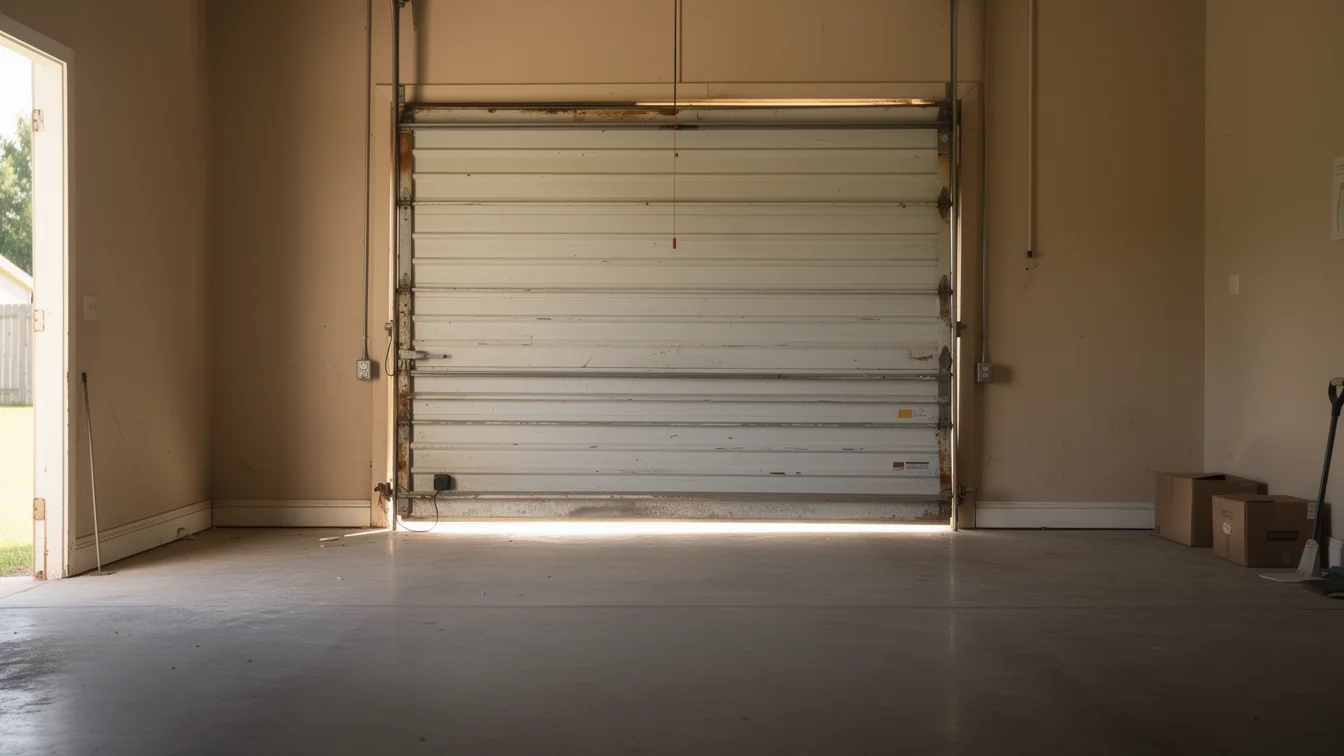
Sonoma sits in a mild climate band with only occasional freeze risk, which is easier on a garage door than a place with real winters. You won't see the hard freeze-thaw cycles that split torsion springs or warp steel panels overnight. What you do see is the age of the housing stock working against you. Most homes in the service area went up between 1947 and 1988, with the median landing around 1969, and that pattern holds across all 18 named areas we cover, from Boyes Hot Springs two miles out to Angwin twenty miles away. A door built in that window was sized for the hardware standards of its decade, not for the heavier insulated panels and openers sold today. Lubricant dries out slower here than in a freeze-heavy climate, which actually hides wear longer than it should. A spring on a 1960s-era door can look fine and still be days from failing, because the mild weather isn't forcing the kind of visible stress cracking you'd catch in a harsher climate. That's the local trade-off: easier conditions on the metal, but older systems that nobody's stocking fresh parts for anymore.
What Most People Get Wrong
The most common mistake is treating a working opener as proof the door itself is fine. On a house from this era, the opener is often the newest part in the whole system. The track, the drums, the torsion spring, even the hinges can all be original to a home built decades before anyone added a modern opener on top. People also grab replacement rollers or a spring off a shelf sized for a current door, not realizing the stock across these 18 named areas is mostly 1960s and 70s construction with different shaft sizes and spring wind counts. It fits poorly, wears fast, and sometimes doesn't fit at all. Another thing owners get wrong: assuming a quiet door is a safe door. A torsion spring under tension can hold for years without noise and then let go all at once, and on an older low-headroom setup that's a heavier failure than on newer gear. We'd rather tell you a part doesn't match your door than sell you one that technically turns but was never built for the load your panel puts on it.
The Problem
A lot of the doors we look at here are original to houses built before insulation rules existed in anything like their current form. That matters for two reasons. First, the panel itself is often a single uninsulated layer of steel or wood, heavier per square foot in some constructions than people expect, which puts more strain on a spring that was never upgraded to match. Second, the track and bracket hardware from that build era was engineered around that original panel weight, so swapping in a modern insulated door without touching the spring and track is where a lot of bad installs come from. We see this most in the older stock concentrated across the 18 named communities in our service area. It's not a dramatic problem day to day. Doors still open, openers still run, nothing looks broken. The issue shows up as a slow creep: a cable starting to fray, a drum worn unevenly, a spring losing tension a little at a time until one morning the door won't lift. We won't sell a full replacement when a spring and cable set still has life in it, but on a door this old, that call has to be made in person, not guessed over the phone.
Season by Season
Spring and fall are the easiest stretch for a door in this climate band. Mild temperatures with occasional freeze mean metal isn't expanding and contracting hard enough to loosen fasteners the way it does in colder regions, so this is a good window to catch a worn roller or a loose track bracket before it becomes a stuck door. Summer brings steady heat that can dry out old lubricant faster on a door that hasn't been serviced in years, especially on original 1960s and 70s hardware where the grease has never been replaced. Winter here isn't severe, but someFreeze means a handful of cold mornings a year where a spring that's already near the end of its life is more likely to snap, since cold metal is less forgiving under tension even in a mild climate. None of this means constant maintenance. It means the two shoulder seasons are the right time to have an old torsion system looked at, rather than waiting for a cold snap to find out it was already weak.
Frequently asked questions
My house was built in the 1960s, is the garage door hardware original
It's common. Most of the housing stock across this service area dates to 1947-1988 with a median build year around 1969, and a lot of those doors are still running their original torsion spring and track setup. We check the hardware in person before assuming anything needs replacing.
Does Sonoma's mild climate mean less garage door maintenance
Less, not none. You avoid the hard freeze-thaw stress that cracks springs in colder regions, but the occasional freeze we do get can still snap an already-worn spring, and dry heat in summer can dry out old lubricant faster than you'd think on original hardware.
Should I replace an old door or just fix the spring
Depends on the door. If the panel and track are sound and it's just a worn spring or cable, repair is the cheaper and faster call. If the panel is original to a pre-1988 build and showing real wear beyond the spring, replacement can make more sense. We'll tell you which one you're looking at.
Related garage door services in Sonoma
More garage door guides
Book garage door service in Sonoma
Call now or request a quote - tell us what the door is doing and where you are.