
Sonoma, CA · Garage Door Service
What's Actually Included When We Come Out to Your Door
A look at what a garage door service call covers in Sonoma, where most houses date to 1947-1988 and torsion springs sized for that era still run the show.
- Repairs & new doors
- Springs & openers
- Serving 6 nearby communities
How Local Conditions Play In
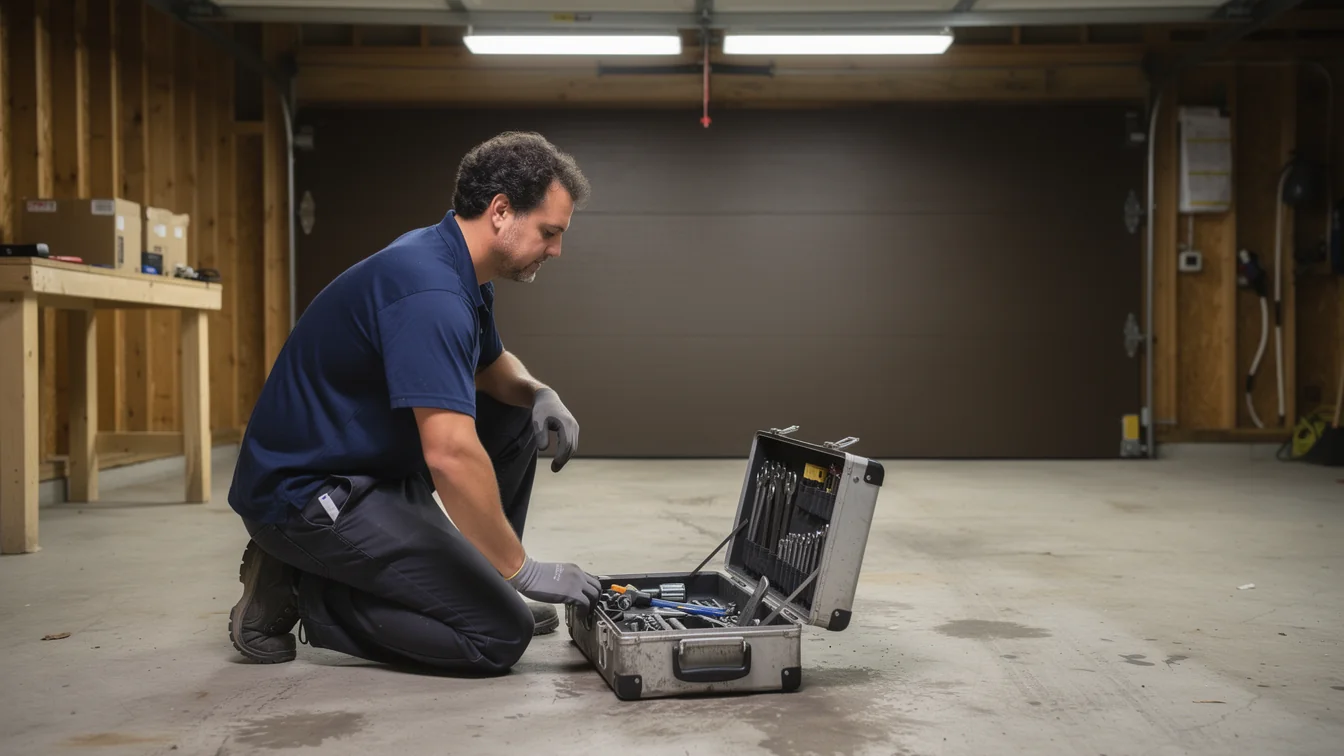
Sonoma's housing stock runs 1947 to 1988, median build year 1969, which means a service call here is rarely about a modern opener with a smart-home glitch. It's about hardware sized and installed for a different era. A call covers inspecting the spring size and winding against what the door weighs now (owners add insulation, swap in a heavier panel, or bolt on a second-layer window kit over the years), checking the track alignment on a slab or jamb that's shifted with 50-plus years of settling, and testing cable wear on drums that have outlived two or three openers already. We also check the hinges and rollers, since original hardware in this age bracket is almost never the same gauge sold today. Climate here is mild with occasional freeze risk, so we're not chasing storm damage or flash-rust the way a coastal fog town would be - we're watching for stiff, cold-morning binding on old steel tracks and lubricant that's gone gummy from sitting unused through a dry summer. None of this is guesswork; it's what you find when the house predates the parts.
What Most People Get Wrong
The biggest misread is assuming a slow or noisy door just needs oil. On a house from the 1960s-70s stock that makes up most of this area, the actual cause is usually a worn roller bracket or a spring that's lost tension gradually over decades - lubricant won't touch either one. The second misread is assuming the opener is the problem when the door itself is out of balance. We check balance first on every call, because an opener straining against a heavy, unbalanced door will burn out in a fraction of its rated life, and replacing the opener without fixing the door just repeats the failure. Third: people assume original hardware can be patched indefinitely. At some point a torsion spring sized for a 1969-era door, on original track, with original cable, isn't a repair job piece by piece - it's a full hardware swap, and we'll tell you when we hit that line instead of billing you for five small fixes that don't add up to a fix.
The Problem
A service call on a house in this age bracket starts with the spring, because that's what's usually failed or failing. We measure wire gauge, coil diameter, and wind direction against the door's actual weight - not a generic size - since houses built between 1947 and 1988 came with a wide range of door weights and track configurations before manufacturers standardized. From there we check the drums and cables for fraying, the track for bowing or separation at the wall brackets, and the opener's force settings, which get adjusted (or never adjusted) over the years as springs lose tension. On a lot of these older setups the safety sensors were retrofitted later and aren't aimed right, which we also test. We're honest about limits here: if the track or jamb has shifted enough that true alignment isn't possible without reframing, that's a carpentry problem before it's a garage door problem, and we'll say so rather than force a fix that won't hold.
Season by Season
With a mild climate and only occasional freeze risk, Sonoma doesn't put a door through the extremes that crack seals or rust out tracks fast. What it does is dry out lubricant and let grit build up in track channels over a long warm stretch, then tighten tolerances on the first cold mornings when steel contracts slightly and old rollers bind. A fall or early-winter call often turns up a spring that was fine in August and is now groaning on the first cold start. We don't see much call for weatherstripping replacement driven by storm damage, since that's not the climate load here - when we replace it, it's usually just age, cracked and flattened from decades of sun on a south-facing door. The practical takeaway: a yearly check before the first cold stretch catches binding and spring fatigue while it's still a small job, not a Saturday-morning no-start.
Frequently asked questions
How do you price a service call in Sonoma?
We don't have a flat number to quote without seeing the door - weight, spring size, and what's actually worn vary a lot on houses built between 1947 and 1988. What we do on every call is check balance, springs, cables, and track before quoting, so you know what's wrong and why before we touch anything.
My door is original to a 1960s house - is it worth fixing or replacing?
Depends what's failed. If it's one spring or a cable, that's a straightforward repair. If the track's bowed, the door's out of square, and hardware is original from the 1960s-70s stock common in this area, patching it piece by piece often costs more over a year than a full swap. We'll tell you which situation you're in.
Do winters here cause garage door problems?
Not in the way hard-freeze climates do. Sonoma's mild with occasional freeze, so we're not dealing with cracked seals or rusted-through tracks from deep cold. What we see is cold mornings tightening up old rollers and exposing a spring that was already losing tension, usually first noticed in late fall.
Related garage door services in Sonoma
More garage door guides
Book garage door service in Sonoma
Call now or request a quote - tell us what the door is doing and where you are.