Sonoma, CA · Garage Door Service
Fast Garage Door Repair for Sonoma Homes
Garage door repair in Sonoma, CA for homes built 1947-1988. We fix the spring, track, and opener faults tied to this area's housing stock and mild climate.
- Repairs & new doors
- Springs & openers
- Serving 6 nearby communities
How to Book
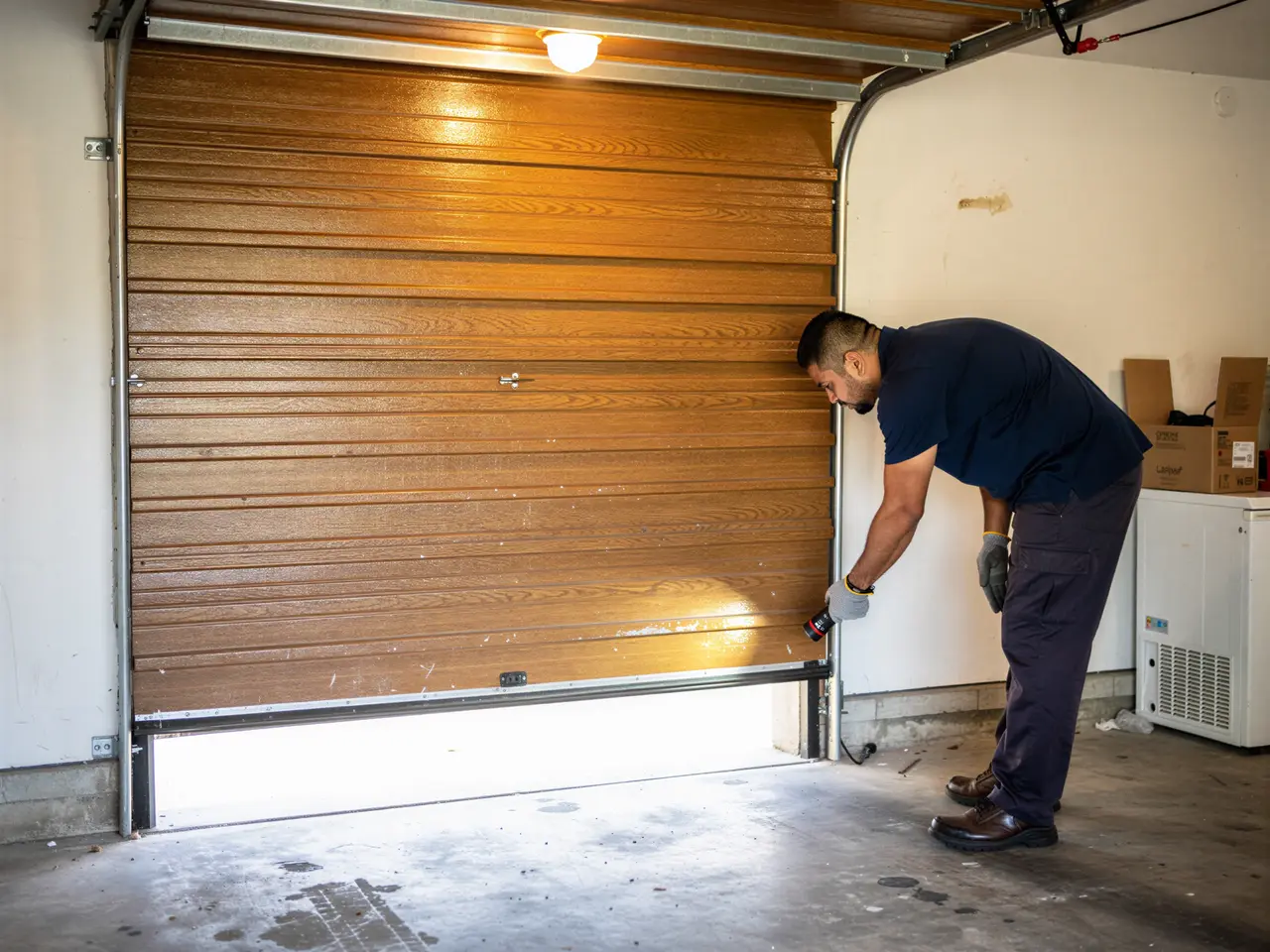
Call us or send a request through the site and tell us what the door is doing - won't open, stuck halfway, making a bang when it closes, opener running but door not moving. That one detail usually tells us what's broken before we pull into the driveway, so we bring the right spring size or roller stock instead of guessing.
We work across the Sonoma service area, including Boyes Hot Springs, Temelec, Eldridge, Glen Ellen, and the other communities out to Angwin. Give us the cross street or nearest landmark when you call so we can route the truck efficiently.
We book same-week in most cases, though torsion spring jobs on double doors sometimes need a specific wire-size spring we don't carry on every truck - if that's the case, we'll tell you straight instead of promising something we can't deliver that day. Book here.
Doing It Yourself
There's real DIY territory in garage door trouble and real DIY danger. Tightening loose hinge bolts, lubricating hinges and rollers, clearing a dirty photo-eye sensor, replacing a remote battery - fine, do it yourself, it's cheap and it's safe.
Torsion springs are not in that category. A torsion spring on a standard door carries enough stored tension to break a wrist or worse if the winding bars slip, and the springs common on the 1960s and 70s builds that make up most of this area's housing stock are often the original undersized units, which means more stored tension relative to the door weight than a modern correctly-sized spring. If the spring is broken, coiled oddly, or the door won't budge by hand with the opener disconnected, that's a call, not a project.
We'll also say plainly: if your cables are badly frayed or a panel is caved in from an impact, repair sometimes costs more over a year or two than replacement would have cost up front. We'll tell you when that math applies instead of running up a repair bill on a door that's past it.
What Causes It Around Here
Most houses in the Sonoma service area were built between 1947 and 1988, with the typical home dating to 1969, and the bulk of that stock across the eighteen communities we cover - from Boyes Hot Springs two miles out to Angwin twenty miles away - is 1960s and 70s construction. Doors and openers from that era, or replacements installed decades ago to match the original rough opening, run on extension springs or undersized torsion springs that were standard then but are light-duty by today's weight standards.
The mild climate here with occasional freezes doesn't split wood panels the way a hard winter would, but it does let galvanized coating on cables and springs wear thin slowly over fifty-plus years without any single dramatic failure to flag it. Owners notice a slow sag in the door, a cable that's starting to fray at the drum, or a spring that's lost its factory tension long before anything snaps.
Across 20,065 households and 11,737 owner-occupied houses in this service area, the pattern repeats: original hardware, decades old, failing quietly rather than all at once.
What You Are Seeing
If your door is from the 1960s-70s building wave common here, a few failure patterns show up again and again. A door that's heavy to lift by hand, with cables visibly loose on one side, usually means a worn extension spring losing tension unevenly - a known issue on original two-spring systems from that era.
A door that opens partway then reverses, or that slams the last foot of travel, often points to a torsion spring that's lost coil tension gradually rather than snapped outright, common on the smaller-wire springs installed as standard decades ago. A grinding or popping sound from one side usually means a roller or hinge worn past its service life on original hardware that's never been swapped.
If the opener runs but the door doesn't move, check the drive gear and the disconnect cord first - on older openers from this housing era, the nylon drive gear is a frequent wear point. With a median household income of $120,523 across this area, most owners choose a proper spring and hardware replacement over a patch job once they understand the gear is original.
Frequently asked questions
Why do so many Sonoma garage doors have the same spring problem?
Because most houses in the service area date to the 1947-1988 build wave, median year 1969, and came with the lighter-duty extension or torsion springs standard for that era. Those springs are now decades past their rated cycle life, so failures cluster in age, not in any one neighborhood.
Can I just replace one spring on a two-spring door?
You can, but we generally don't recommend it. If one spring on an original 1960s-70s system failed from age, the other is close behind. Replacing both at once costs little extra over one and avoids a second service call a few months later.
Does Sonoma's climate affect garage doors much?
Not the way a harsh winter would - the mild, occasional-freeze climate here doesn't crack panels or freeze tracks. But it does let galvanized hardware corrode slowly over many years, so failures here tend to be gradual wear rather than sudden weather damage.
How far out do you go for a repair call?
We cover the Sonoma service area including Boyes Hot Springs, Temelec, Eldridge, Glen Ellen, and communities out to Angwin, about 20 miles. Let us know your location when you call so we can give you an honest window.
Related services
Related guides
By Neighborhood
Garage Door Repair across the Sonoma area
We also handle garage door repair in these Sonoma-area suburbs.
Book garage door service in Sonoma
Call now or request a quote - tell us what the door is doing and where you are.