Sonoma, CA · Garage Door Service
Garage Door Service for Lucas Valley-Marinwood Homes
Lucas Valley-Marinwood's houses run a few years older than the rest of the service area. That gap in build year is exactly what decides which spring and track you need.
- Repairs & new doors
- Springs & openers
- Serving 6 nearby communities
What You Are Seeing
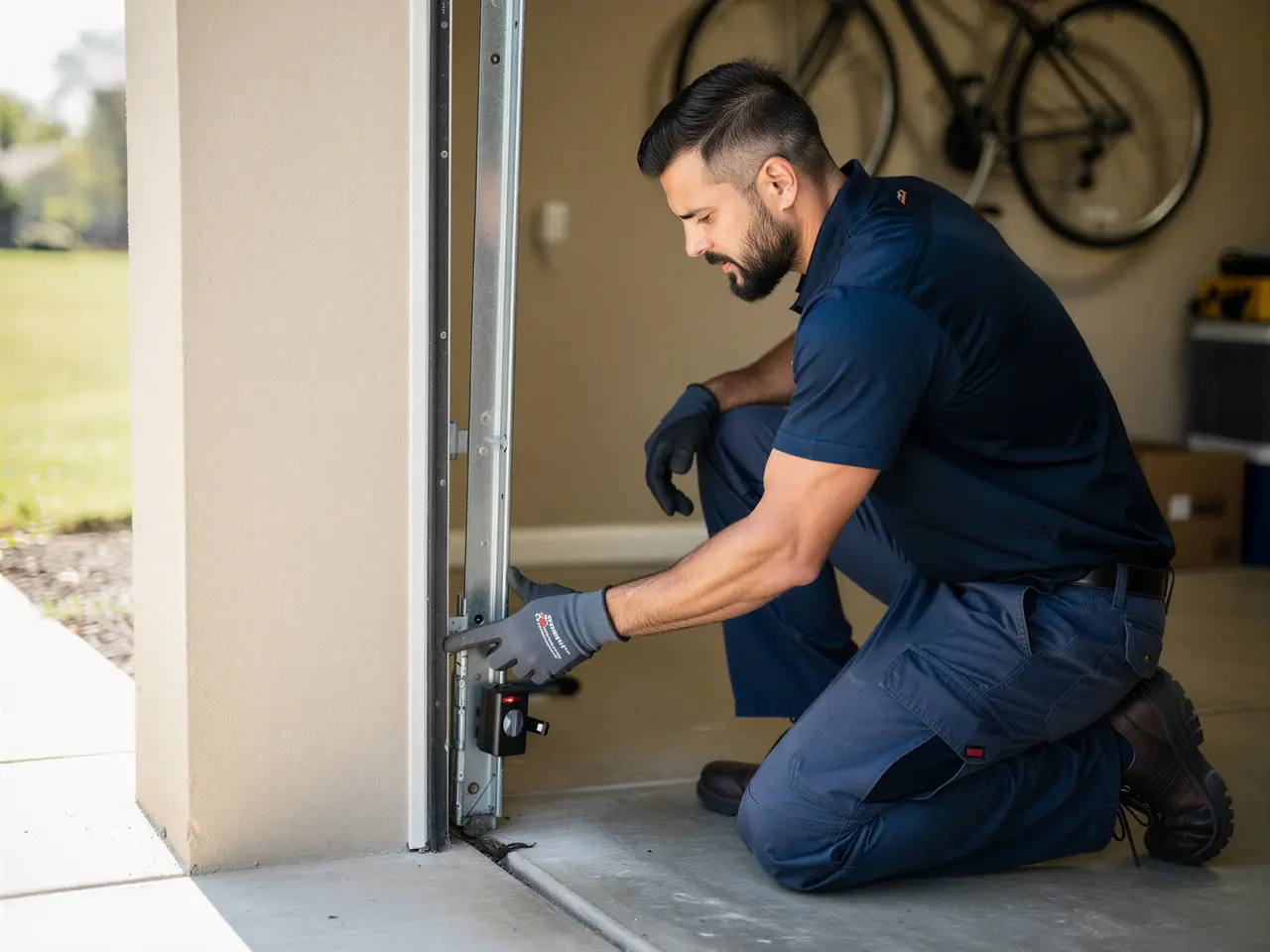
Most of the service area we cover out of Sonoma was built between 1947 and 1988, with a median around 1969. Lucas Valley-Marinwood runs a bit ahead of that: the typical house here went up around 1963, which puts a good share of these garage doors and openers on hardware that's a few years older than what we see closer to Sonoma itself. That gap matters more than it sounds. A door and track sized for a 1963 build often sits on a narrower opening and a lighter spring than what came standard by the late 60s and 70s, so a replacement part pulled off a newer door down the road won't always bolt in clean. If your opener struggles to lift the door, or the door sits crooked in the frame when it's down, that's usually the original track geometry doing exactly what it was built to do - just not what a modern door expects. We're eighteen miles out from our base in Sonoma, so when we come out here we plan for that older hardware rather than assume a stock part will fit.
How Long It Takes
We don't keep a branch or a truck staged in Lucas Valley-Marinwood - every job here is a drive out from Sonoma, eighteen miles each way. That doesn't change what the repair itself takes once we're on site; a spring swap or a cable replacement runs the same whether we're in town or out here. What it does mean is that we're not going to promise a same-hour arrival we can't back up. If the part on your door is a size that matches the common 1960s stock - and a lot of it here does, given the median build year of 1963 - we can often carry it on the truck already. If your door turns out to be a less common width or an opener model we need to special-order, that adds a day or two, same as it would anywhere in the area.
What Causes It Around Here
The climate band here is mild with occasional freeze, which is gentler on steel and springs than a true freeze-thaw climate, but it's not nothing. On a door with mid-60s hardware, galvanized coatings that have had sixty years to do their job start showing surface rust at the roller brackets and the bottom corners of the track, especially where water sits after a cold snap. Combined with the age of the stock here, the failure we see most isn't storm damage - it's fatigue. Torsion springs rated for a certain cycle count simply run out of life, and on a door from the 1963 era that spring has usually seen more open-close cycles than a spring on a newer door elsewhere in the service area would have by now. Income levels in this part of the service area run well above the broader area median, which we mention only because it tends to mean owners replace a tired spring or opener before it fails outright rather than running it to failure - worth knowing if you're deciding whether to fix now or wait.
What the Fix Involves
For a door built around 1963, the fix usually starts with matching spring wind and track width to what's actually on the wall, not what a parts catalog lists as standard for the decade. We measure before we quote. If the opener is original or a direct early replacement, we'll tell you plainly when a repair isn't worth it - a 1960s-era opener with a failed circuit board is often cheaper to replace outright than to source parts for, and we won't pretend otherwise to pad a job. One limitation worth saying up front: because we travel from Sonoma rather than stocking a branch here, an unusual part size can mean a short wait for us to bring it back out, rather than a same-visit fix. For most jobs on these older doors - a spring, a cable, a bent track section - we carry what's needed and finish in one visit.
Frequently asked questions
Is my garage door opener too old to repair?
It depends on the model, not just the age. Some openers from the 1960s era still have parts available; others don't, and replacing the whole unit ends up cheaper than chasing discontinued boards. We'll tell you straight which situation yours is in before we quote anything.
Do you have a crew based in Lucas Valley-Marinwood?
No - we run out of Sonoma, about eighteen miles away, and drive out for every job here. That doesn't change the repair itself, but it does mean we schedule rather than promise instant arrival.
Why does my door's spring keep failing faster than a neighbor's newer one?
Torsion springs are rated for a certain number of open-close cycles, and a spring installed when this area's typical house was built in the early 1960s has usually logged more cycles by now than one on a newer door. Age and use both factor in, not just one or the other.
More garage door services in Lucas Valley Marinwood
- Emergency Garage Door Repair in Lucas Valley Marinwood
- Garage Door Repair in Lucas Valley Marinwood
- New Garage Door Installation in Lucas Valley Marinwood
- Off-Track Garage Door Repair in Lucas Valley Marinwood
- Garage Door Opener Installation in Lucas Valley Marinwood
- Garage Door Opener Repair in Lucas Valley Marinwood
- Garage Door Roller Replacement in Lucas Valley Marinwood
Book garage door service in Sonoma
Call now or request a quote - tell us what the door is doing and where you are.