
Sonoma, CA · Garage Door Service
Garage Door Installation for Eldridge Homes Built Around 1969
New garage door installation in Eldridge, CA. Homes here date to 1969; original hardware is common. Sonoma Garage Door Pros installs from nearby Sonoma.
- Repairs & new doors
- Springs & openers
- Serving 6 nearby communities
What Causes It Around Here
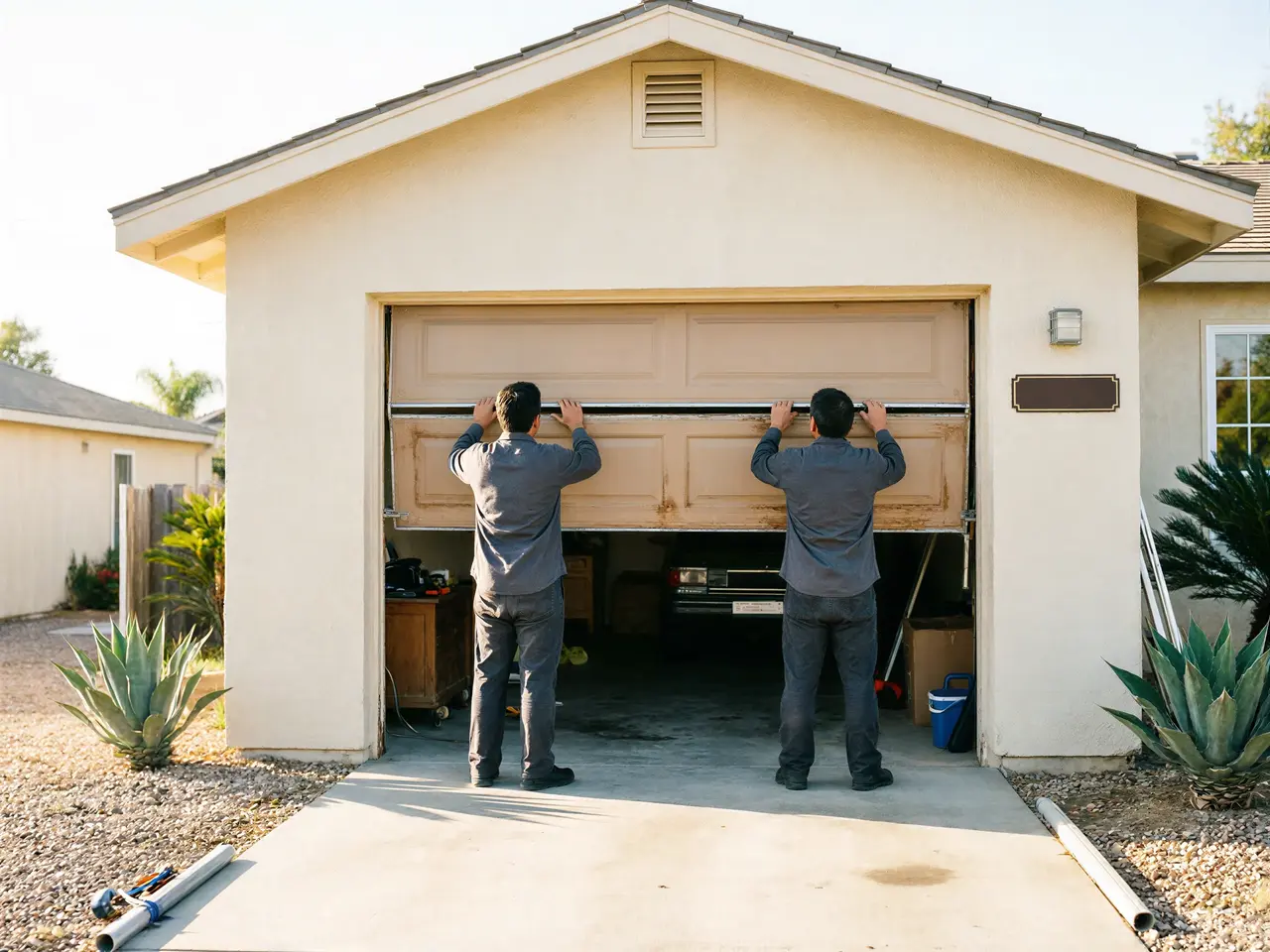
The number that matters most in Eldridge isn't a weather statistic, it's a build date. The median home here went up around 1969, and across the wider area the housing stock runs 1947 to 1988 with most of it clustered in the 1960s and 70s. That means a lot of garages in Eldridge still have the track, the spring anchor, and sometimes the actual door panel that came with the house. Nobody has replaced it because nothing broke badly enough to force the issue - it just got slower, louder, and harder to trust.
The climate here is mild with only occasional freeze risk, so the failures aren't about ice splitting a panel the way they might further north. They're about age: galvanized track that's pitted from decades of use, a torsion spring wound for a door that's been rebalanced or re-skinned once already, lift cables fraying where nobody can see them until they let go. When a homeowner calls about installing a new door, it's rarely a surprise - it's a door that's been on borrowed time since the Johnson administration, give or take.
What the Fix Involves
A proper new install starts with pulling the old door, spring, and track assembly, not just hanging a new panel on old hardware. On a house from the late 1960s, the opening itself is usually sound - framing from that era was built to last - but the jamb brackets and the header reinforcement often aren't rated for a heavier insulated door. We check that before anything goes in, because skipping it is how you end up with a door that works fine for six months and then sags.
Given the mild, only-occasional-freeze climate out this way, we don't default to the thickest insulation package. Most Eldridge jobs land on a standard steel or composite door with a reasonable R-value rather than the heavy foam-core doors we'd spec somewhere with real winters. Homeowners here, with a median income around $111,983, more often ask about a door that looks right on the house and runs quietly for the next twenty years than about shaving the last dollar off the invoice. That's a fair trade, and it's usually the right call.
What Is on the Truck
For a standard install we carry common door sizes, torsion springs rated for a range of door weights, galvanized track, rollers, a drive cable set, and the usual bracket and fastener hardware. Openers, safety sensors, and wall controls ride along too, since most new door jobs include swapping the opener rather than bolting a new door to a thirty-year-old motor.
What we don't carry is every size. If your opening is a nonstandard width - not uncommon on a house this old, where additions and garage conversions sometimes reshaped the original bay - that's a special-order door, and it waits on a supplier lead time like anywhere else. We'd rather tell you that up front than promise a same-week install we can't back up.
Doing It Yourself
A new garage door looks like a weekend project on video, and the panel-hanging part mostly is. The part that isn't is the torsion spring. It's wound under enough tension to break a bone or worse if it lets go while you're working on it, and on a door this age the spring you're replacing may not match anything sold today - meaning you're also guessing at the wind count on the new one.
Opener wiring is the other spot where DIY gets expensive fast. Modern openers have safety reversal sensors that have to be aligned correctly or the door will close on anything in its path, including a car bumper or a kid's bike. If you're comfortable with a drill and a level, swapping weatherstripping or a keypad is reasonable. Spring tension and opener safety wiring are where we'd tell you to call instead of improvise.
The Complications
Eldridge is about four miles from Sonoma, which is close enough that travel isn't the issue - scheduling around a small service area is. With only 456 households in Eldridge itself, we're not running a dedicated crew out here daily; a job gets slotted into the same route as the rest of the area we cover from Sonoma, so install day gets set, not squeezed in same-day.
The other complication is the house itself. On a build from 1969, you sometimes find the opening was never squared to begin with, or a prior owner widened it without touching the header. Either one adds time and, occasionally, a structural fix before the new door goes in. We flag that during the estimate, not after the door's already on the truck.
Frequently asked questions
Do you carry a branch in Eldridge?
No. Sonoma Garage Door Pros covers Eldridge from Sonoma, about four miles away. We don't keep a local depot here, so installs are scheduled trips rather than same-day drop-ins, and we're upfront about that when we book the job.
Will a new door fit my original 1960s opening?
Usually yes - framing from that era tends to be standard sized. The common issue is the header or jamb bracket not being rated for a heavier insulated door, which we check before install rather than after the door's already hung.
Do I need heavy insulation for an Eldridge garage?
Probably not. The area sits in a mild climate with only occasional freeze risk, so most homeowners here do fine with a standard-grade insulated door rather than the heavy foam-core packages built for places with real winters.
Can I just replace the panel and keep my old spring?
We don't recommend it on a door this age. A spring wound for the original panel weight often won't balance a new door correctly, and on hardware this old the wind count may not be documented anywhere. We replace spring and door together.
More garage door services in Eldridge
Book garage door service in Sonoma
Call now or request a quote - tell us what the door is doing and where you are.